Meet Gail
Name: Gail Redpath
Age: 54
Location: Edinburgh, Scotland
Occupation: Cancer fighter!!!
When were you diagnosed with leiomyosarcoma?
I was diagnosed in June 2024.
What symptoms led to your diagnosis?
It all started when I found a lump “down below”. My GP thought it was a Bartholin’s cyst and sent me straight to hospital to have it checked.
After several doctors examined me, they agreed it was a cyst and drained what turned out to be a golf ball-sized lump. It was incredibly painful, but I thought that was the end of it.
A little while later, I received a phone call asking me to return to the hospital. I was actually sitting in the memory clinic with my dad, who was being diagnosed with Alzheimer’s disease at the time. I went to the appointment on my own because, deep down, I knew something wasn’t right.
The doctors told me I had cancer – a type that affected soft tissue and muscle – but they didn’t tell me its name. I remember thinking, “No problem, they’ll cut it out and I’ll be fine.”
It wasn’t until I spoke to my own GP that I finally learned the name of the disease: leiomyosarcoma (LMS).
How did you feel when you found out you had leiomyosarcoma?
At first, after the biopsy, I actually felt quite positive. I felt strong and ready to face whatever came next.
That changed after my MRI and CT scans.
I was told the cancer had spread from my uterus to my lymph nodes and lungs, and that there was nothing they could do to cure it. I nearly passed out with the shock.
I was referred to oncology and told that any treatment would be palliative, not curative. I was also given a prognosis of only a few months and advised to get my affairs in order.
My twin daughters were only 19 at the time, and telling them was one of the hardest things I’ve ever had to do. My husband and I have been together for 36 years, and I can’t begin to imagine how difficult it was for him.
But I knew one thing for certain.
I was going to fight this with every breath.
What treatment have you had for leiomyosarcoma?
In July 2024, I had radiotherapy because the tumour came back very quickly. It grew down and out of my body, which meant I couldn’t sit down or even walk properly. Thankfully, the radiotherapy shrank the tumour and gave me some relief.
By November 2024, the tumours in my lungs had started to grow, so I began chemotherapy.
I’m still receiving palliative chemotherapy today.
Because leiomyosarcoma is such a rare and aggressive cancer, there are only limited treatment options available, so every scan and every treatment decision feels incredibly important.
Do doctors know how you’ve defied the odds?
Well, to be honest, I don’t really ask!
Every three months I have scans and then meet my consultant to hear the results. They tell me whether the existing tumours have grown, stayed stable or shrunk.
After that, I only have one question:
“Has anything new appeared?”
Because leiomyosarcoma is a soft tissue cancer, it can spread almost anywhere – your legs, your stomach, anywhere there’s soft tissue.
It’s a wee bugger!
As I’m due to get my latest scan results on Thursday, the scanxiety is definitely kicking in. Waiting for scan results is one of the hardest parts of living with cancer.
What is life like living with palliative treatment?
It’s fine… but it can be quite boring!
There are definitely days when chemotherapy wipes me out and I can’t get out of bed. But when I’m feeling well, I make the most of it. I take the dogs for walks, meet friends for coffee and spend time with my family.
I don’t work anymore and I really miss it. I’d love to volunteer, but I can’t commit to regular days or times because I never know how I’m going to feel.
Sometimes I feel quite low because everyone else’s lives are moving forward. They’re making plans for the future while I sometimes feel like I’m just existing.
That’s one of the reasons I loved organising our fundraising party.
It made me feel useful again.
I know how fortunate I am though. I have an incredible support system around me. My family and friends are always there for me.
They’re my army.
How has your diagnosis affected your family?
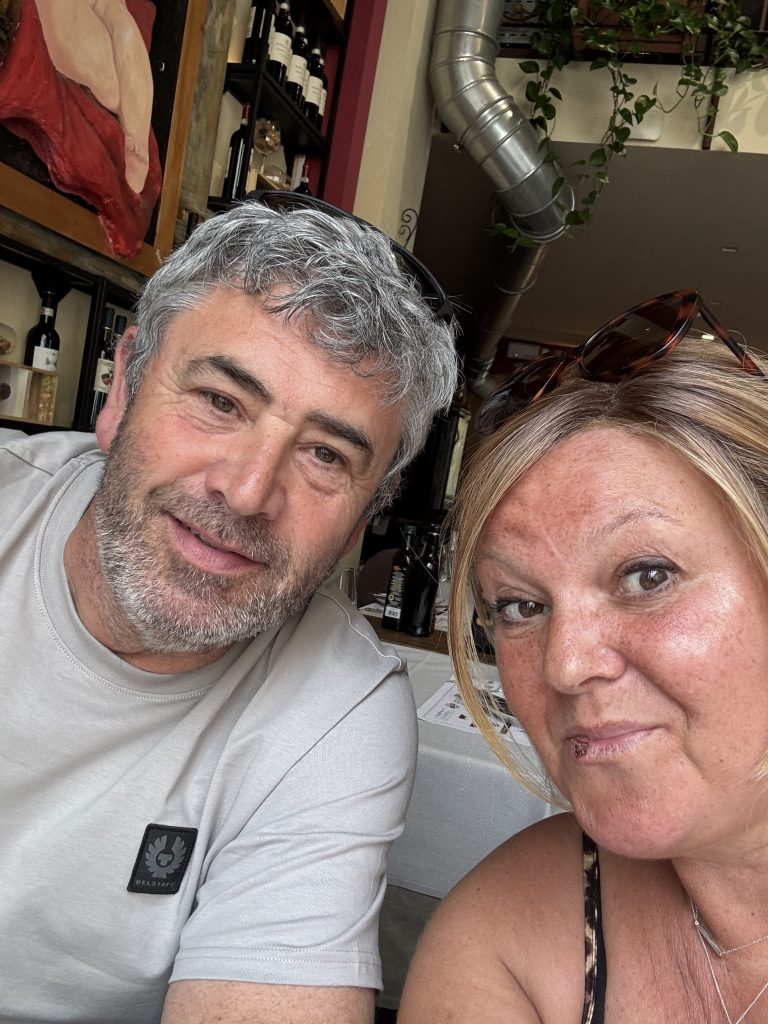
We’re a very close family and I honestly couldn’t have got through this without them.
There were lots of tears and fears in the beginning, but we’ve become even stronger together.
My daughters both still live at home, so they’re a huge help, and my husband really is one in a million.
My parents live nearby too, although it’s been especially difficult watching my dad’s Alzheimer’s disease progress alongside everything else that’s happening.
Last year my husband became seriously ill and ended up in intensive care. I genuinely believe stress played a huge part in that.
We try to be open with each other. We talk about everything.
Most importantly, we just keep living our lives.
What does your new normal look like?
These days, my routine is all about making the most of the good days.
I still do some housework, although not as much as I’d like. I love taking my mum shopping, meeting friends for coffee and walking the dogs.
I do get tired quite easily, so I usually have a wee rest in the late afternoon.
Evenings are my favourite time of day.
I catch up with my husband and daughters, then we relax together with Netflix and a bit of TikTok.
It’s not the life I imagined, but it’s our normal now.
How does chemotherapy affect your day-to-day life?
I’ve actually been quite lucky with the side effects of chemotherapy.
After more than a year of treatment, I’ve learned what my body needs. I know when to take paracetamol for aching joints or medication for an upset stomach.
Some days, though, I simply can’t get out of bed.
Chemotherapy isn’t easy and, over time, it really takes its toll on your body.
Even so, I do everything I can to live as normal a life as possible.
Once I’ve got my make-up on and my wig in place, I’m ready to face the world.
How are things now?
At the moment, I’m waiting for my latest scan results.
If these results are ok / good, I hope to have a short break from chemotherapy because it can be so hard on the body. I’m very lucky that the cancer itself doesn’t cause me any pain. If I can have a break I plan on a few wee trips – although I’ve been lucky enough to still be able to go on holiday throughout chemo.
The results will decide what happens next, but the plan is to continue treatment for as long as it’s working.
I’m planning on being here as long as possible!!
What has kept you positive?
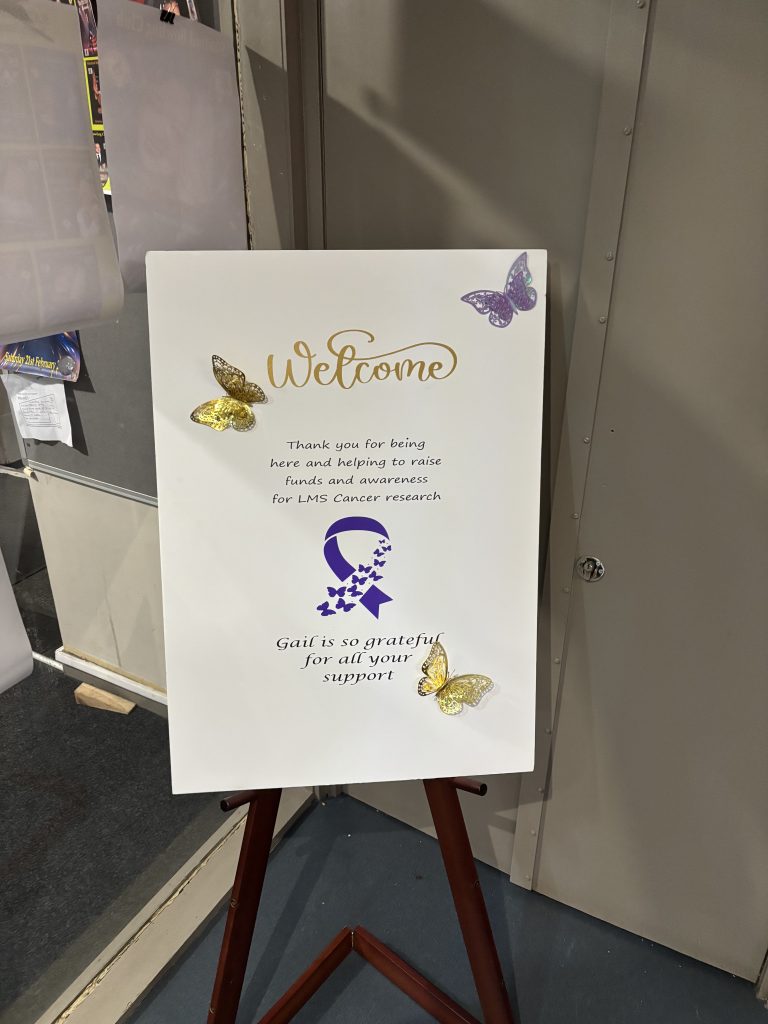
One thing that has given me real purpose is fundraising for LMS Research UK.
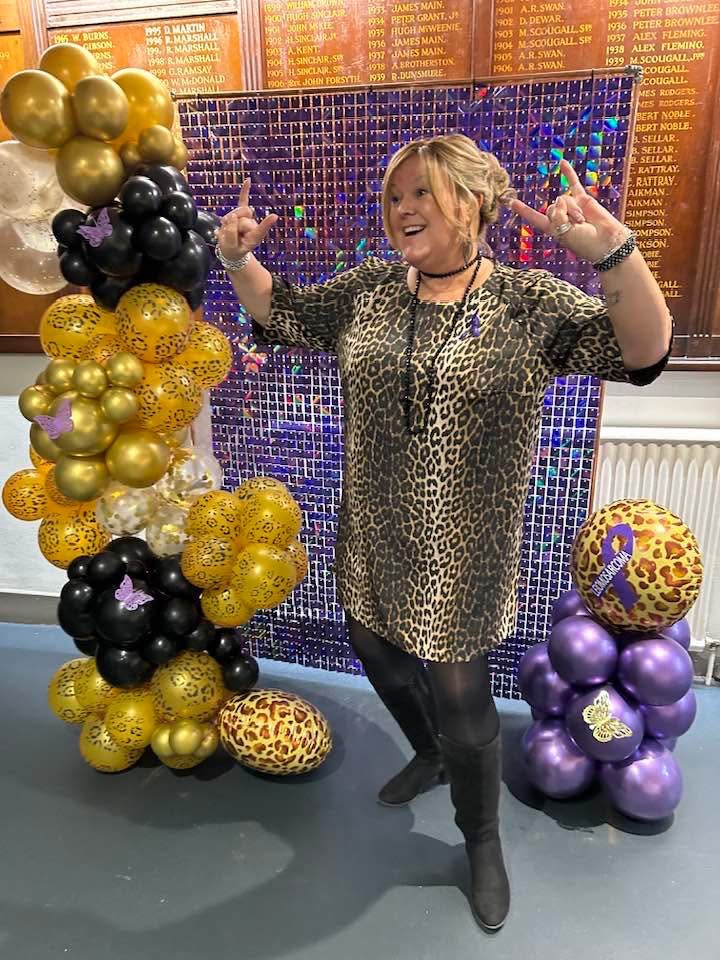
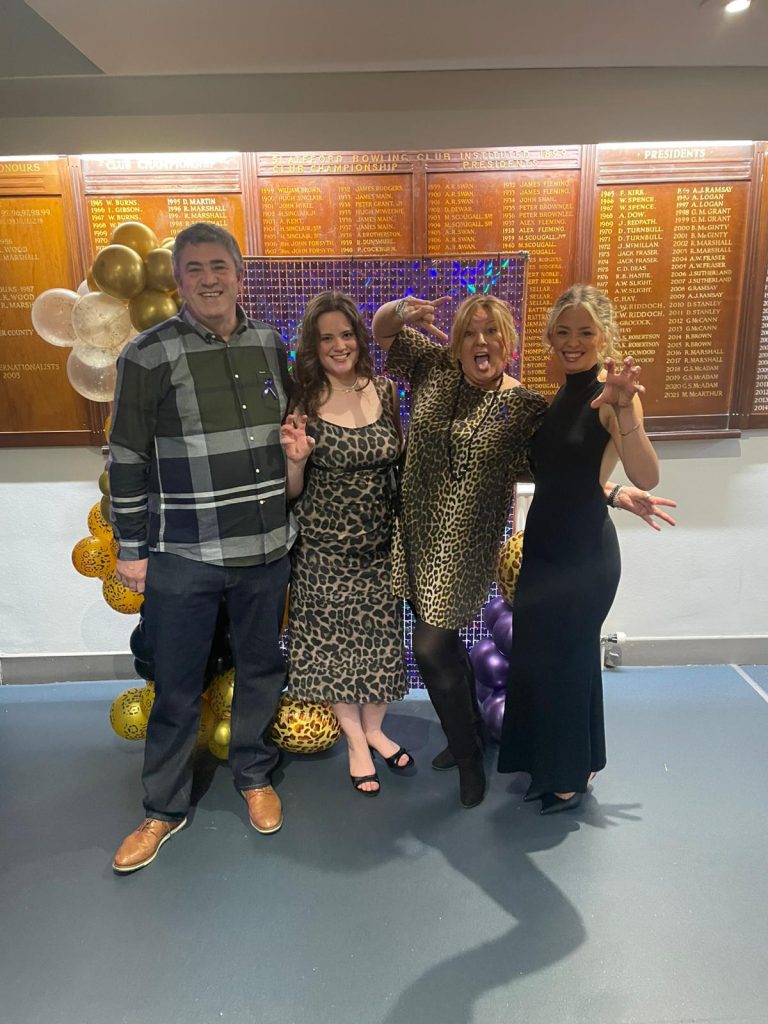
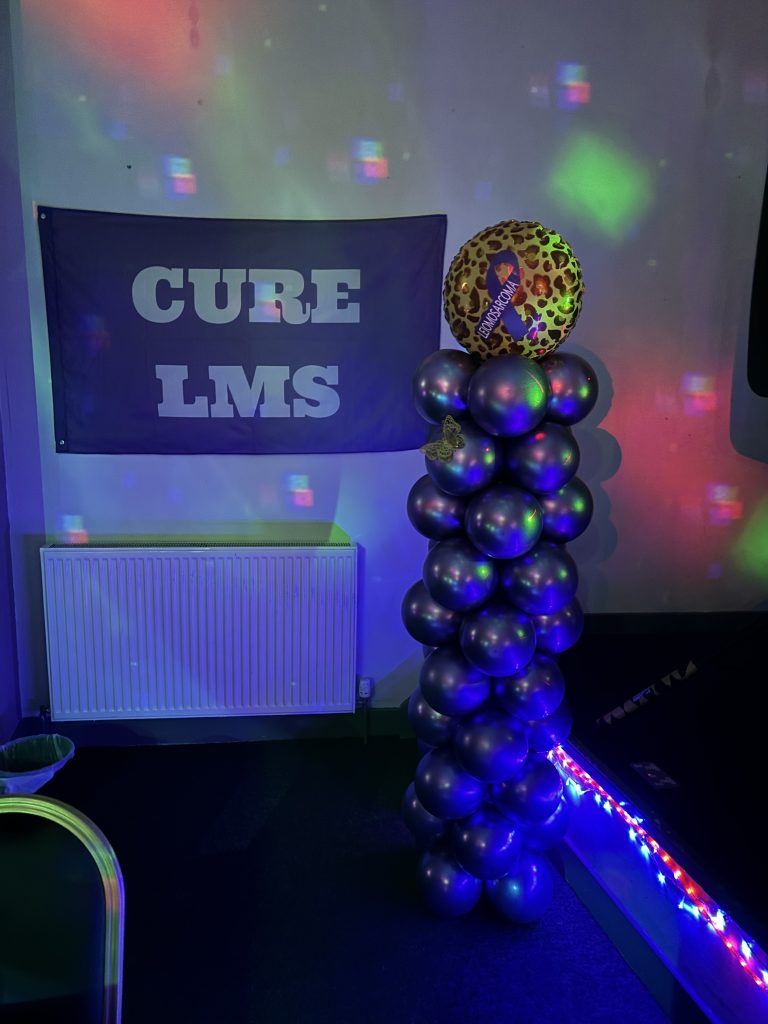
Recently, my family and friends organised a fundraising party in support of leiomyosarcoma research.
Thanks to ticket sales, donations, a tombola and an auction, we raised more than £8,000.
Knowing we’re helping to fund research into better treatments for future patients means everything to me.
Gail’s Message
“I was told I only had months to live, but I’m still here. I don’t know what tomorrow will bring, but I do know that today I’m going to make the most of it. Once I’ve got my make-up on and my wig in place, I’m ready to face the world. I’m planning on being here as long as possible.”
About Leiomyosarcoma
Leiomyosarcoma (LMS) is a rare soft tissue sarcoma that develops in smooth muscle tissue. It can occur in the uterus, abdomen, blood vessels and other parts of the body. Because it is rare, diagnosis can be delayed and treatment options are often limited. Specialist care, research and clinical trials are essential to improving outcomes for people living with leiomyosarcoma.
LMS Research UK is the UK’s dedicated leiomyosarcoma charity, funding vital research, raising awareness and providing trusted information and support for patients and families affected by this rare cancer.